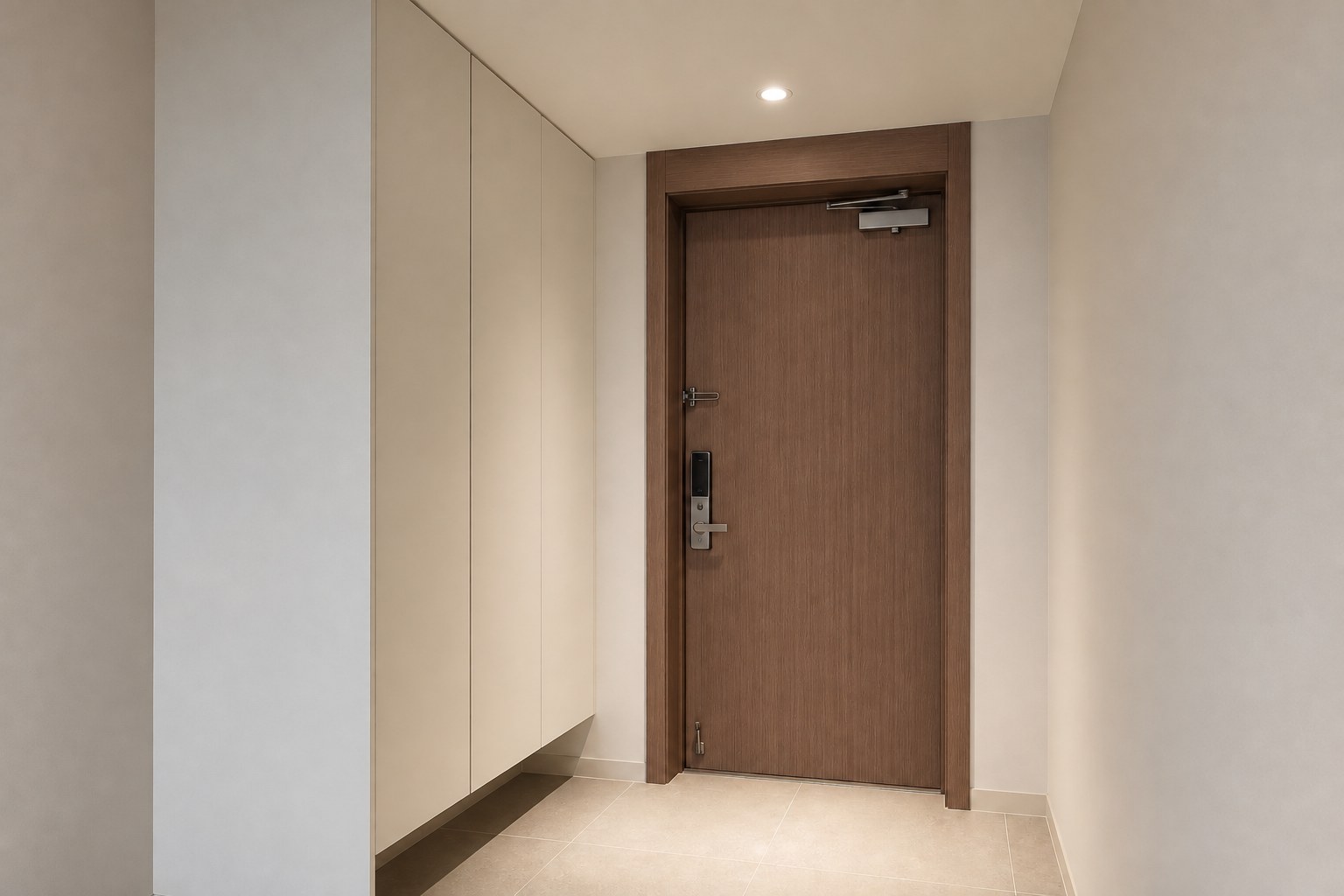
Staged image. Colour: AW009 (wood colour range)
The entrance door is the first surface you meet coming home, and in older buildings it is where a dated colour or worn paint shows first. Replacing the door is a construction job; refacing it with film keeps the door and changes only the surface. The shared technique is in our kitchen cabinet guide; here is what the entrance changes.
Before you start: that door may be a fire door
In apartment buildings the unit entrance door is often a rated fire door. That sets lines worth respecting.
- Do not modify the door itself. Drilling new holes or removing functional parts (the door closer, the smoke gasket around the frame) changes the door's performance. Applying a surface finish and altering the door's construction are different things.
- The outer face often counts as a common area under building rules; check with the building management before touching it. This guide's baseline is the interior face.
- A door that exists for fire safety is a natural place to match the material to the same standard. How fire ratings on film are certified and read is covered in our gas toxicity test explainer.
Step by step
Staged renders keyed to a physical swatch (AW009). The single biggest difference from other surfaces first: the entrance door stays on its hinges. A steel fire door is heavy and its hinge and closer hardware are complex; removal carries more risk than reward.
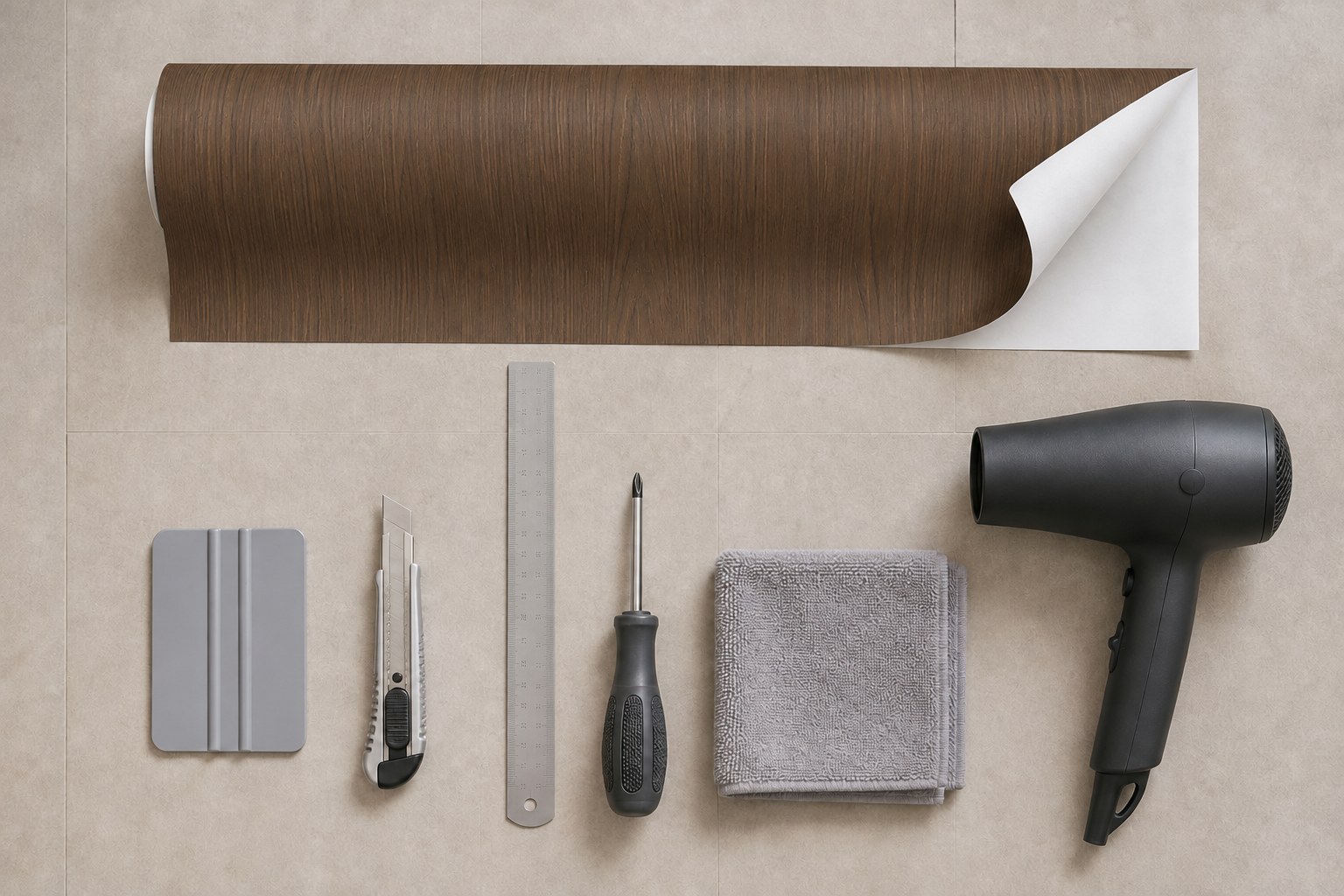 Step 1 · Tools. Same kit as the refrigerator, plus a screwdriver for hardware.
1. Gather the tools. Film, squeegee, knife, ruler, screwdriver, cloth, hair dryer. Using a wood grain? Confirm the grain will run vertical before you cut.
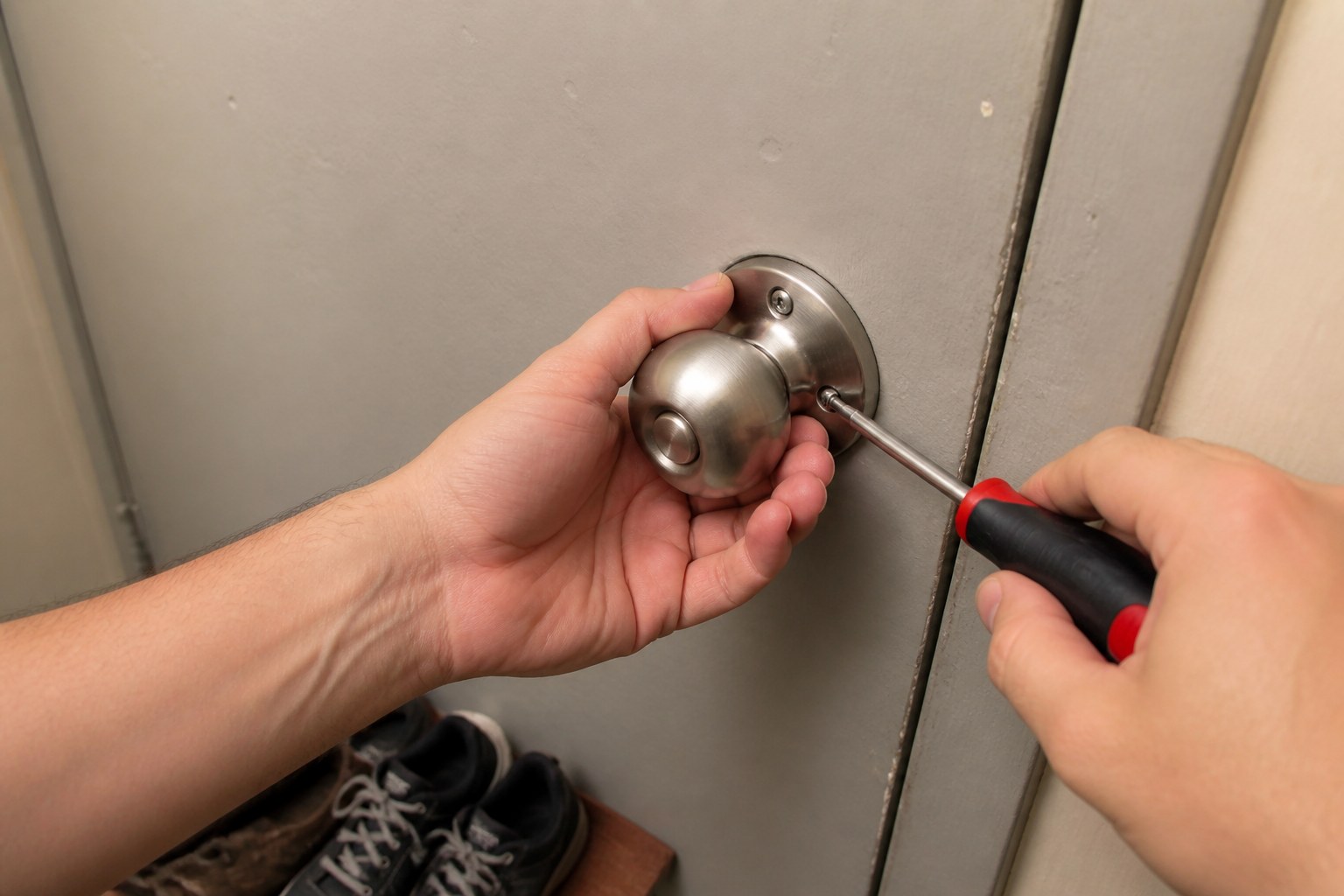 Step 2 · Hardware off. Every part removed is a cleaner finish.
2. Remove hardware and degrease. Take off the handle, the door stopper, and any removable covers; group the screws and photograph their positions. Anything you'd rather not remove, the lock body, stays on and gets trimmed around later. Then the standard degrease: neutral detergent, dry, alcohol finish. On a steel door this step, not primer, decides the outcome.
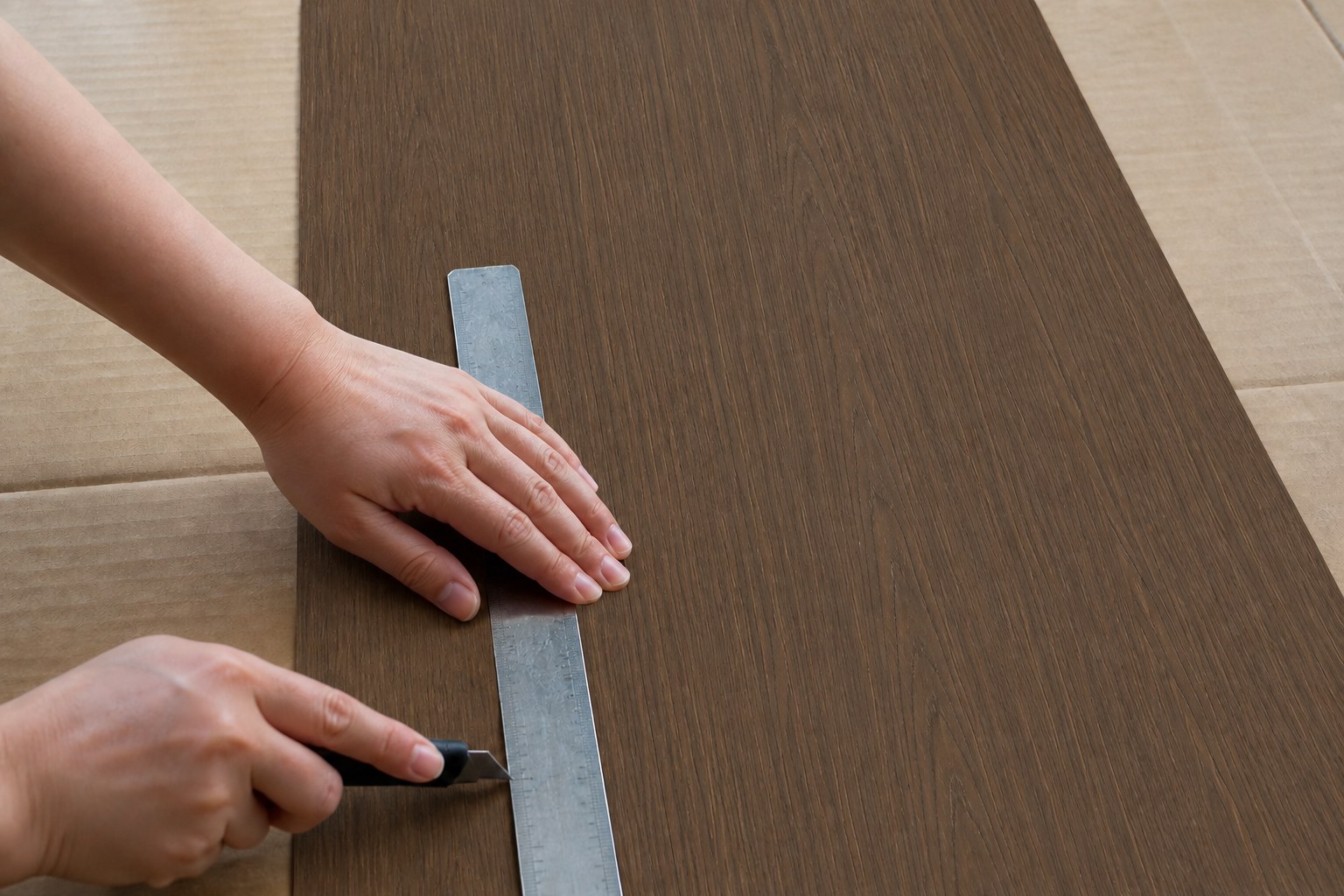 Step 3 · Cut. Grain vertical, margin 3–5 cm.
3. Cut with a margin. Measured size plus 3–5 cm each side, grain running vertically down the door. The moment the grain lies horizontal, the door reads as furniture.
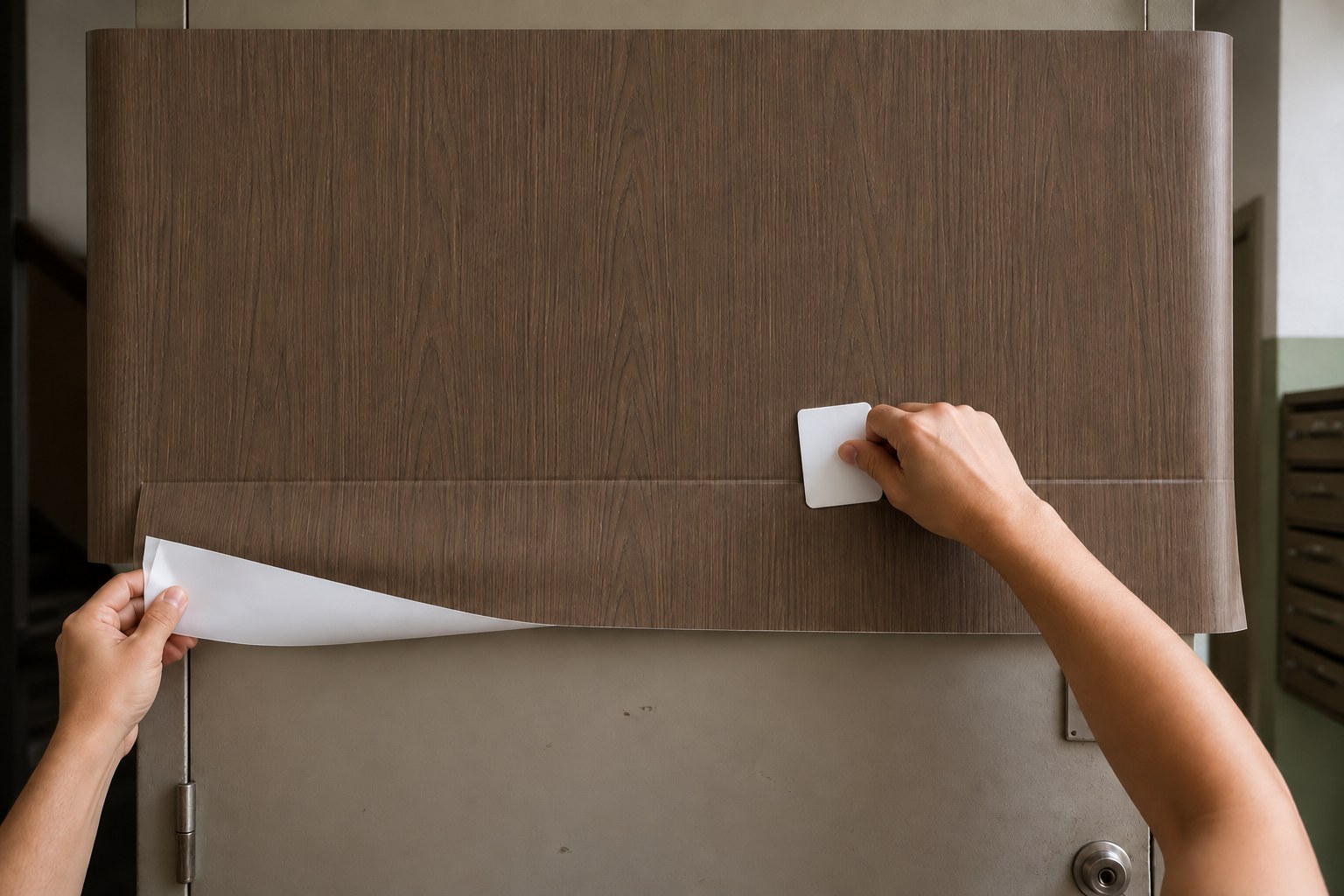 Step 4 · Apply. Upright, top-down, squeegee blade horizontal.
4. Work top-down. Peel the top 5–10 cm of liner, level the sheet against the top of the door, and fix it. Then peel gradually while drawing the squeegee downward in one direction, the blade held horizontal, parallel to the adhesion line, so it scrapes the film down without trapping air. On a vertical surface the sheet wants to sag, so one hand keeps tension on the hanging film. This is the step where a second pair of hands earns its keep.
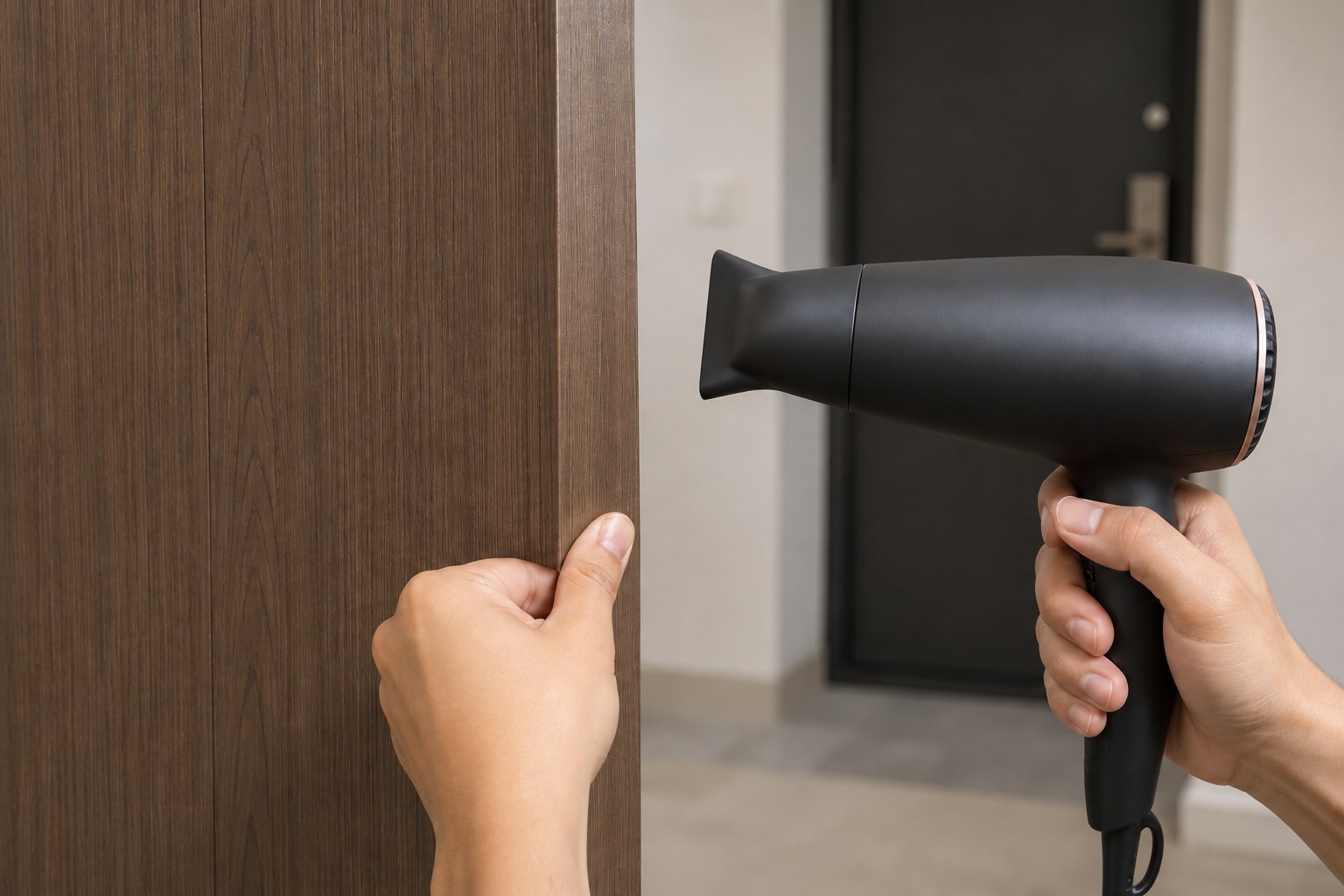 Step 5 · Edge finish. Heat short and gentle, at a distance.
5. Finish edges and openings. Wrap the side margins with 3–5 seconds of gentle heat per section, fold, and press. The peephole and lock get covered first, then trimmed along their bezels. When the hardware goes back on, the photos from step 2 answer every screw-hole question.
Winter doors and condensation
The entrance door is the coldest metal surface in the home, and in winter the interior face can sweat. Moisture at the adhesive line lifts any film, so pick a fully dry day to install, and wipe the door promptly whenever condensation appears afterwards. The 18–24°C application window applies here as everywhere else.
A note on the material
Art-Eco, the Hansol line we distribute, uses a food-container-grade PP substrate with no phthalate plasticisers. Hansol Art-Eco and Neotec SAVE, both of which we supply, are the only lines in Korea's self-adhesive sheet category with KFI quasi-non-combustible certification. Certificates are in our documentation; wood colours in context are in the lookbook.
FAQ
Q. Is film on a fire door allowed at all? The premise is a surface finish that does not modify the door: functional parts untouched, interior face as the baseline, outer face cleared with building management first.
Q. Wouldn't it be easier to take the door off and lay it flat? For a furniture door, yes, that's the standard. An entrance door is different: the weight of a rated steel door and the complexity of its hinges and closer make removal riskier than working upright. Standing, top-down, is the entrance-door standard.
For product and import enquiries, contact us.
YEILDECO
Fire-rated, PVC-free architectural film
Semi-non-combustible (KFI-certified), PVC-free interior film from Korea. We welcome distributor and export inquiries.